In India’s rapidly evolving corporate landscape, choosing the right office furniture has become more strategic than ever. The demand for functional, visually appealing, and productivity-enhancing workspaces is rising across startups, multinational corporations, and co-working hubs. But when it comes to designing an office, the key question many businesses ask is Modular Office Furniture vs Traditional Furniture — which works better for Indian workspaces? In this comparison, we’ll break down what works best for Indian offices today and help you make an informed choice.
Understanding Traditional Office Furniture
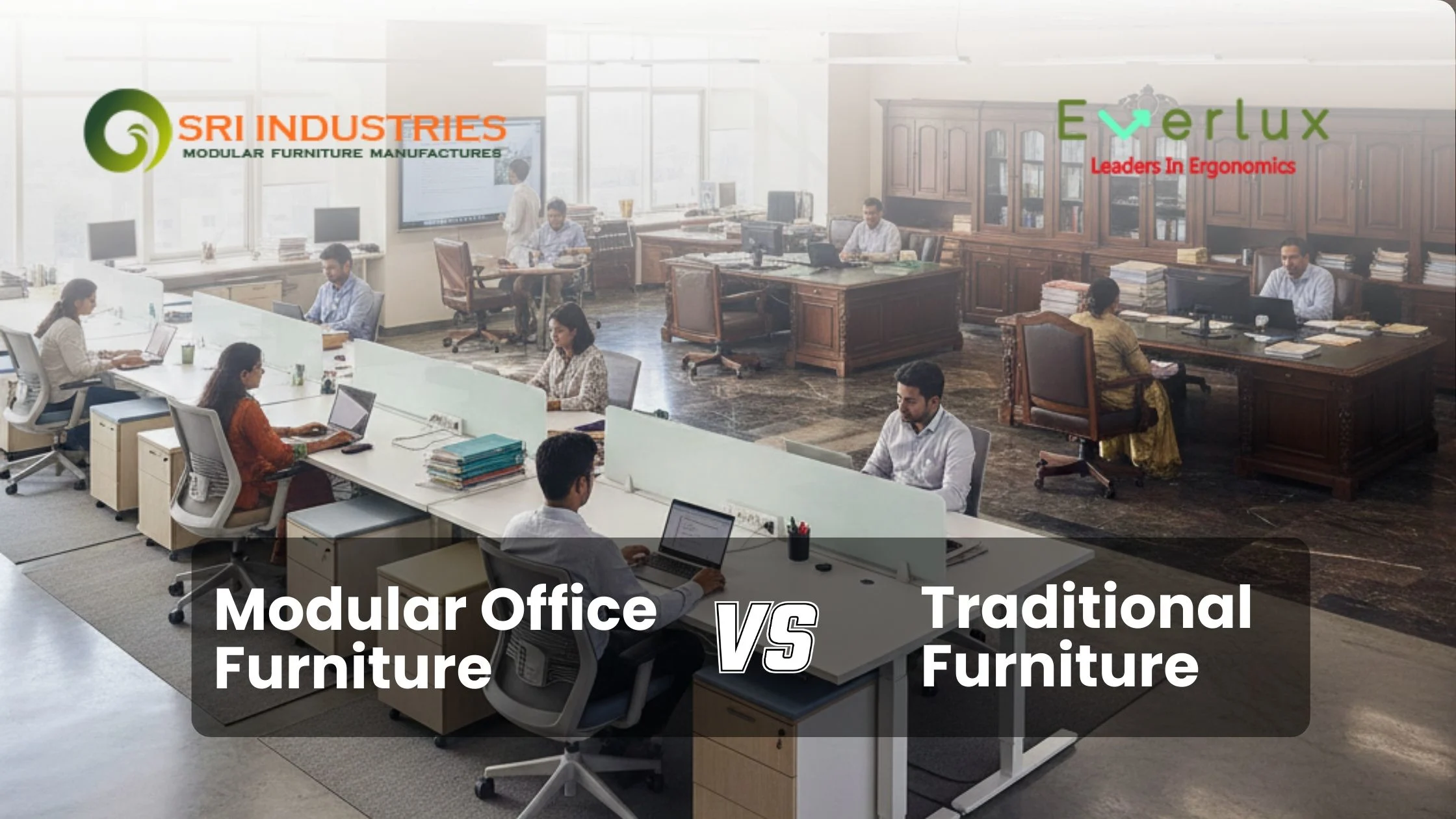
Traditional office furniture refers to classic, pre-configured designs — think solid wood desks, fixed cabinets, and standalone reception counters. These pieces often bring a timeless, elegant look and are associated with reliability and durability.
Traditionally, Indian offices such as law firms, financial institutions, and heritage corporate spaces have favored classic furniture for its formal ambiance and long-lasting build. However, while such pieces convey authority, they can lack flexibility when your workspace needs to evolve.
Where traditional furniture excels
- Timeless design suited to conventional office layouts
- Heavy and durable materials
- Ideal for static office arrangements
But as businesses grow and adapt, these features can quickly become limitations — especially when space, flexibility, and employee comfort are priorities.
What Is Modular Office Furniture?
Modular office furniture refers to flexible systems that can be reconfigured, rearranged, and adapted to changing business needs. These include modular desks, benching systems, movable storage units, collaborative tables, and ergonomic chairs — designed to grow with your office.
The rise of hybrid work models and flexible workspaces has catalyzed the shift toward modular designs, with Indian companies embracing reconfigurable systems that support dynamic layouts. The benefits are especially popular in modern Indian offices — whether a startup in Bengaluru or a co-working hub in Pune.
Key features of modular solutions:
Configurable components that adapt to space
Ergonomic and productivity-focused design
Easy assembly and relocation
Ideal for collaborative work zones
Modular vs Traditional: Head-to-Head Comparison
Let’s take a closer look at how modular and traditional office furniture stack up — especially when you’re aiming for a space that’s productive, cost-efficient, and future-ready.
1. Flexibility & Scalability
In today’s fast-paced Indian business environment, flexibility is no longer a luxury — it’s a necessity.
- Modular furniture lets you expand or reorganize workstations without major renovations.
- Traditional furniture is fixed and often requires time-consuming adjustments when layouts change.
If your team is growing or roles are evolving, modular solutions win hands down.
Keyword emphasis: modular vs traditional office furniture, space-saving office furniture
2. Space Optimization
India’s major office markets — from Mumbai to Chennai — are seeing record levels of office leasing, reflecting sustained corporate expansion. In 2025, office leasing activity hit a remarkable 82.6 million sq ft, underscoring growth in workspace demand across sectors.
Modular layouts help you maximize every square foot:
- Bench desks and shared seating optimize density
- Moveable partitions carve out private or collaborative zones
- Space-efficient storage integrates seamlessly
Traditional systems, built for dedicated zones, can congest smaller offices and make space reconfiguration expensive.
3. Productivity & Employee Comfort
A growing focus on corporate wellness and ergonomic design is reshaping office furniture preferences in India. By 2030, the office furniture market is expected to reach nearly $7.3 billion, with companies investing in ergonomics, adjustable desks, and health-focused seating.
Research shows that ergonomic chairs and desks can help reduce physical strain and improve concentration — leading to better productivity and reduced absenteeism over time.
Modular benefits for well-being:
Height-adjustable workstations
Ergonomic seating options
Collaborative and social zones
Support for hybrid work styles
Compared to static traditional setups, modular furniture is tailored to support employee comfort — a key driver of performance today.
4. Cost & Long-Term Value
At first glance, traditional office furniture — often heavier and constructed from solid wood — appears sturdy but comes with higher upfront costs and limited adaptability.
Modular furniture offers:
- Lower renovation costs when layouts change
- Scalable investment — add units as needed
- Ability to re-use components across office upgrades
In the long term, this translates to better ROI, especially for organizations with dynamic teams or evolving workspace strategies.
Keywords: cost of office furniture in India, office furniture comparison
5. Aesthetics & Modern Branding
Modern office design trends in India lean heavily toward open, collaborative spaces with clean lines and contemporary finishes. Whether integrating glass partitions or creating lounge areas, brand identity and aesthetic coherence matter a lot.
Modular systems are inherently more adaptable to modern design principles than traditional furniture, making them ideal for modern office interiors in India.
Keywords: modern office interiors India, ergonomic office furniture
Real-World Office Furniture Trends in India
India’s broader office furniture market reflects strong growth and evolving workplace expectations:
Market growth: The Indian office furniture market was valued at over USD 4.8 billion in 2025 and is projected to expand steadily, with modular and adaptive furniture gaining strong traction.
Ergonomics & wellness: Increasing focus on employee health and productivity is pushing demand for ergonomic, sit-stand solutions and wellness-centric furniture.
Regional adoption: South India — including Bengaluru, Hyderabad, and Chennai — leads in demand for contemporary office setups, while North India is witnessing rapid growth in modular solutions across co-working hubs and startups.
How to Choose What’s Right for Your Workspace
Here are practical pointers to guide your decision:
Assess your space needs — Modular systems offer more room for future expansion.
Prioritize employee comfort — Ergonomic seating and flexibility matter for productivity.
Factor in hybrid work models — Modular layouts support fluid work patterns.
Budget smartly — Look at long-term value rather than upfront cost alone.
Align with your brand — Furniture is part of your visual identity and office culture.
Conclusion: Which Works Better?
There’s no one-size-fits-all answer — but for most Indian workspaces today, modular office furniture has a clear edge. It offers adaptability, productivity benefits, scalability, and alignment with modern office trends. Meanwhile, traditional furniture still holds value in classic corporate environments where solidity and heritage aesthetics are priorities.
For businesses that aim to stay agile and employee-focused — especially in fast-growing sectors — modular solutions are increasingly the smart choice.
Whether you’re setting up a startup hub in Pune or revamping a corporate floor in Delhi, choose furniture that supports your business goals, enhances comfort, and reflects your workspace vision.Explore premium modular and traditional office furniture solutions at Sri Industries — your partner for smart, stylish, and durable office interiors.